Diaphragmatic Breathing: All you need to know OptimumOSTEO

Introduction to Diaphragmatic Breathing
For more than ten years, I have been immersed in the world of breathwork, meditation, and conscious exploration of the body-mind connection. Alongside my practice as an osteopath, where I work with the subtle rhythms of the body, I discovered that one of the most powerful yet underestimated tools we have is diaphragmatic breathing.
This way of breathing is far more than simply filling the lungs with air. It is about re-educating the body to breathe the way it was designed to — with the diaphragm leading the movement, creating a wave that flows through the abdomen, the ribcage, and even into the nervous system. While modern lifestyles push many of us into shallow chest breathing, diaphragmatic breathing restores efficiency, calm, and presence.
For centuries, martial artists, yogis, meditators, and healers have used diaphragmatic breathing to cultivate energy, resilience, and awareness. Today, research in neuroscience, physiology, and psychology confirms what these traditions knew intuitively: diaphragmatic breathing has profound effects on health, stress regulation, and consciousness.
In this guide, I’ll explain what diaphragmatic breathing is, why it matters, how it differs from shallow chest breathing, what science says about its benefits, and how to practice it. I’ll also share practical exercises, emotional insights from osteopathy, and resources for those who wish to go deeper.
What Is Diaphragmatic Breathing?
Diaphragmatic breathing refers to the process of using the diaphragm — a dome-shaped muscle beneath the lungs — as the main driver of breath. When you inhale, the diaphragm contracts and moves downward, causing the abdomen to expand outward. This creates negative pressure, drawing air deep into the lungs.
This is different from chest breathing, which primarily uses the intercostal muscles between the ribs and the upper thoracic cavity. Chest breathing is shallower, faster, and typically triggered by stress or exertion.
Diaphragmatic breathing doesn’t mean air goes into the belly. The air still enters the lungs, but the mechanical motion of the diaphragm mobilizes the abdomen and massages the internal organs. This creates circulation, stimulates the vagus nerve, and directly impacts the nervous system.
As an osteopath, I have often noticed that when the diaphragm is restricted, people lose fluidity not only in their breathing but in their entire system. Areas without movement become stagnant, and stagnation leads to physical and emotional tension. Diaphragmatic breathing restores motion and awareness where it is most needed.
Diaphragmatic Breathing and the Nervous System

The nervous system is deeply influenced by how we breathe. Shallow chest breathing is associated with activation of the sympathetic nervous system, the branch responsible for the fight-or-flight response. In contrast, diaphragmatic breathing engages the parasympathetic nervous system, which promotes rest, recovery, and healing.
When you inhale deeply through the diaphragm, you stimulate mechanoreceptors in the chest and abdomen that activate the vagus nerve. This lowers heart rate, improves heart rate variability, and sends a signal of safety to the brain. The body moves out of survival mode and into repair mode.
Scientific Research
- A comprehensive review by Zaccaro et al. in Frontiers in Human Neuroscience demonstrated that slow, deep breathing significantly increases vagal activity and supports relaxation. It also found evidence for improvements in emotional regulation and cognitive function. (Frontiersin.org, 2018)
- A 2023 review in Frontiers in Physiology highlighted the cardiovascular benefits of diaphragmatic breathing, showing reductions in blood pressure and improvements in vascular tone.
- A meta-analysis in Nature Scientific Reports (2022) confirmed that breathwork practices incorporating diaphragmatic breathing significantly reduce perceived stress and anxiety.
- Studies in PMC (2024) suggest diaphragmatic breathing also enhances emotional resilience by improving interoception — the ability to sense internal bodily states.
This evidence makes it clear that diaphragmatic breathing is not just a relaxation trick, but a scientifically validated way to restore balance to the nervous system.
The Benefits of Diaphragmatic Breathing
1. Nervous System Regulation and Vagus Nerve Stimulation
One of the most important benefits of diaphragmatic breathing is its ability to regulate the autonomic nervous system. The diaphragm is not just a respiratory muscle; it is also deeply linked to the vagus nerve, which passes through the thorax and abdomen. Every deep inhalation and exhalation with the diaphragm provides mechanical stimulation to this nerve, which in turn activates the parasympathetic branch of the nervous system. This has the effect of lowering heart rate, increasing heart rate variability, and shifting the body into a calmer state. In osteopathy, we often see patients stuck in “sympathetic overdrive” — muscles are tense, digestion is slowed, and breathing is shallow. Teaching diaphragmatic breathing re-educates the system to rest, recover, and heal. Over time, this practice can retrain the baseline of the nervous system away from chronic stress and toward resilience.
2. Stress and Anxiety Reduction
Another powerful effect of diaphragmatic breathing is the reduction of stress and anxiety. When we breathe high into the chest, the body interprets it as a signal of danger — it is the breathing pattern of someone preparing to run or fight. Diaphragmatic breathing, by contrast, tells the body that it is safe. Scientific research confirms this: studies in Nature Scientific Reports and PMC demonstrate that slow, deep breathing reduces activity in the amygdala (the brain’s fear center) while increasing alpha brain waves associated with relaxation and emotional control. This is why diaphragmatic breathing is often prescribed for anxiety disorders, panic attacks, and trauma recovery. From my own clinical perspective, patients who learn to shift from shallow breathing to diaphragmatic patterns report a decrease in racing thoughts, muscle tension, and feelings of overwhelm. It is a natural, drug-free way to bring the mind back into balance.
3. Improved Oxygenation and Energy Efficiency
Physiologically, diaphragmatic breathing is far superior to chest breathing for oxygen exchange. The lower lobes of the lungs, which are engaged during belly breathing, have more alveoli and better blood perfusion than the upper lobes. This means oxygen uptake and carbon dioxide release are both more efficient. In practical terms, this leads to more stable energy, greater endurance, and reduced fatigue. Athletes who retrain themselves to breathe with the diaphragm often find they can perform at higher levels with less strain, while meditators notice they can sit longer with a calmer mind. On the flip side, chronic chest breathing keeps oxygen exchange superficial, requiring more breaths per minute, which wastes energy and contributes to fatigue. Diaphragmatic breathing slows the rate, deepens the intake, and optimizes every breath cycle, making it not only healthier but more energy-efficient.
4. Digestive and Visceral Health
The diaphragm is not only a respiratory muscle; it is also a pump that massages the abdominal organs with every breath. During diaphragmatic breathing, as the diaphragm descends, it gently compresses the stomach, intestines, and liver, improving circulation and supporting peristalsis. This rhythmic motion promotes better digestion, stimulates lymphatic flow, and can even relieve constipation. Osteopathically, we see that many digestive complaints are worsened by shallow breathing patterns, which leave the abdominal cavity static and under-mobilized. By restoring diaphragmatic motion, patients often report improvements not only in digestion but also in abdominal comfort, reduced bloating, and an overall sense of lightness. Modern research supports this: deep breathing exercises are increasingly recognized as supportive therapies for gastrointestinal disorders because they directly influence the gut-brain axis. Thus, diaphragmatic breathing is not just about air — it is about creating motion and vitality in the very core of the body.
5. Emotional Processing and Release
One of the subtler but most transformative benefits of diaphragmatic breathing lies in its relationship with emotions. The diaphragm and abdomen are often where we store unprocessed experiences. Fear tightens the belly, grief creates heaviness, anger hardens the solar plexus. When we breathe only into the chest, we avoid these deeper sensations, staying at the surface. Diaphragmatic breathing reopens the abdomen and allows these hidden emotions to resurface in manageable ways. Clinically, I have seen patients begin to cry, laugh, or feel waves of warmth as their diaphragm relaxes during treatment. This is the body’s way of completing unfinished emotional cycles. Psychologists now talk about “interoception” — the ability to sense internal states — as a key to emotional regulation. Diaphragmatic breathing is one of the most direct ways to improve interoception. With practice, it helps us to feel more fully, to process emotions rather than suppress them, and to live with greater freedom and authenticity.
6. Cardiovascular Benefits and Blood Pressure Regulation

The cardiovascular system also benefits tremendously from diaphragmatic breathing. Each breath influences blood pressure, circulation, and even heart rhythm. Slow diaphragmatic breathing creates gentle pressure changes in the thoracic and abdominal cavities, which improves venous return to the heart and stabilizes blood flow. Studies in Frontiers in Physiology show that daily diaphragmatic breathing reduces blood pressure in patients with hypertension and improves heart rate variability — a marker of cardiovascular health. These findings are so strong that some doctors now recommend breathing exercises as a complementary treatment for hypertension. From a practical standpoint, patients who practice diaphragmatic breathing daily often report feeling less strain on the heart, fewer palpitations, and more overall vitality. By contrast, chest breathing can keep the cardiovascular system under stress, increasing the risk of long-term issues. Thus, diaphragmatic breathing is not just a stress reducer, but a preventative practice for heart health.
7. Expanded Consciousness and Meditative Presence
Beyond the body, diaphragmatic breathing also transforms consciousness. Slow, deep diaphragmatic breathing synchronizes brain rhythms, enhances alpha and theta waves, and fosters meditative states. Spiritual traditions have known this for centuries — pranayama in yoga, qigong in Chinese medicine, and chanting practices all emphasize diaphragmatic movement. From my personal experience, when I practice daily diaphragmatic breathing, I feel more connected to myself and the world around me. It creates a sense of spaciousness, presence, and alignment that chest breathing cannot provide. Neuroscientific studies suggest that diaphragmatic breathing improves focus, increases emotional resilience, and even enhances creativity by modulating networks in the prefrontal cortex. In essence, diaphragmatic breathing is not only a physical practice but also a gateway to greater awareness, helping us access higher states of consciousness while remaining grounded in the body.
Diaphragmatic Breathing in Breathwork
In breathwork traditions, diaphragmatic breathing is the foundation.
- In the Wim Hof Method, each breath begins in the abdomen before expanding into the chest (see Wim Hof breathing).
- In Breathwork DMT, diaphragmatic breathing increases oxygen availability and is linked to pineal gland activation (see Breathwork DMT).
- In gentle practices of conscious breathing, diaphragmatic breathing is the base layer before experimenting with faster or more intense rhythms (see techniques).
Without diaphragmatic breathing, advanced practices lose their grounding and safety.
Practical Exercises for Diaphragmatic Breathing
Exercise 1: Basic Diaphragmatic Awareness
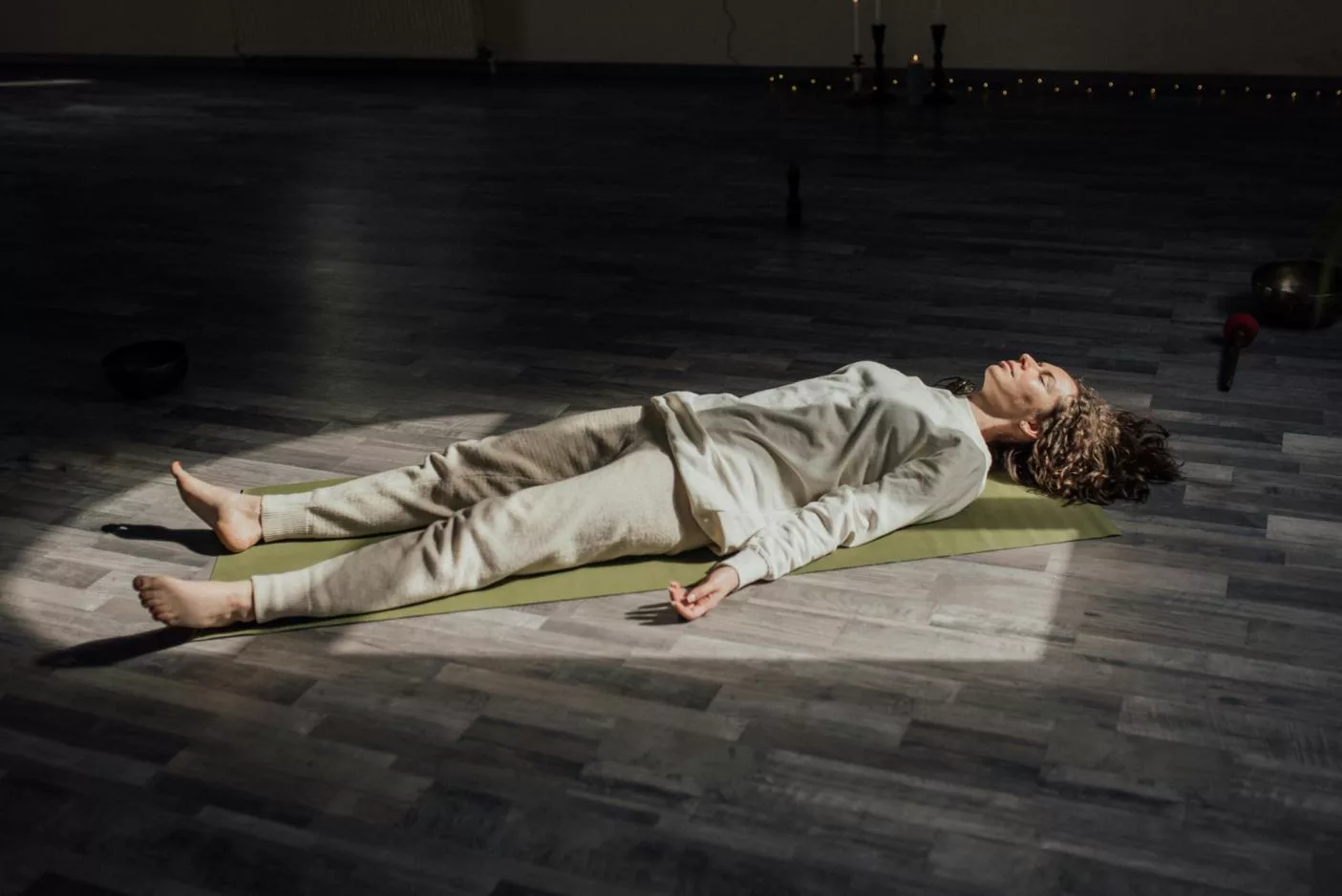
- Lie on your back with one hand on your chest and one on your abdomen.
- Inhale slowly through the nose, letting the belly rise more than the chest.
- Exhale gently through the mouth, feeling the belly fall.
- Continue for 5–10 minutes, focusing on the abdominal movement.
Exercise 2: Box Breathing with Diaphragm Focus
- Inhale for 4 seconds, expanding the belly.
- Hold for 4 seconds.
- Exhale for 4 seconds, letting the belly sink.
- Hold empty for 4 seconds.
- Repeat for 10–12 cycles.
Exercise 3: Theta Breathwork with Diaphragm
- Inhale through the nose slowly for 4 counts, belly first, then chest.
- Exhale through the mouth for 4 counts.
- Continue without pause for 15–20 minutes.
- Observe sensations, emotions, and subtle shifts in awareness.
These exercises can be practiced daily to re-train the body into diaphragmatic patterns.
Breathing: Emotions, Awareness, and Somatic Release
From my perspective as an osteopath, I consistently observe that when the body seems “frozen,” it is usually because the nervous system has chosen to protect itself by shutting down sensation. This protective reflex often shows up as subtle but widespread contractions — in the abdominal wall, around the diaphragm, and through the postural framework. These contractions reduce the natural respiratory wave and create rigidity. Practicing diaphragmatic breathing, by letting the diaphragm drop during inhalation and allowing the abdomen to expand, restores mobility. With that mobility comes presence: areas that had gone numb or withdrawn from awareness are invited back into perception. In essence, diaphragmatic breathing reopens the door to emotions and sensations that had been held at a distance.
Diaphragmatic breathing works as a bridge between three dimensions: interoception (the felt sense of the inner body), nervous system regulation (via parasympathetic activation and vagal stimulation), and emotional release. When the abdomen softens and moves freely, the diaphragmatic wave ripples through the entire body: the pelvic floor, the viscera, the fascia, the ribcage, and even into the cranial structures. This ripple reintroduces flow where there had been immobility. The nervous system interprets this as a message of safety and gradually reduces its state of alarm. As a result, unresolved emotional material can surface and integrate without overwhelming the person.
Understanding Protective Contractions
In times of stress, the sympathetic nervous system becomes dominant. The body braces: the abdominal wall tightens, the diaphragm loses amplitude, and breathing migrates upward into the chest. This shallow, elevated pattern cuts us off from the deeper layers of sensation and reduces awareness of emotions such as fear, grief, or anger, which are stored in the viscera and in the enteric nervous system. Breathing gently undoes this pattern. By softening the abdominal wall and encouraging the diaphragm to descend, it re-establishes the basic somatic sense of safety that allows us to feel again.
Restoring the Wave and Presence
On a practical level, diaphragmatic breathing begins with a nasal inhale that allows the lower abdomen to expand as the diaphragm contracts downward. The wave then naturally rises into the ribcage. On the exhale — ideally soft and released through the mouth — the abdomen gently falls and the chest settles. This cycle creates a steady, fluid respiratory wave. Over time, it triggers reflex relaxation of the deeper musculature, massages the abdominal organs, and improves heart rate variability (HRV), a key marker of nervous system balance. The smoother and more continuous the diaphragmatic wave becomes, the greater the capacity for subtle awareness: small sensations of warmth, tingling, or gentle pressure reveal that energy and consciousness are being redirected along the axis of belly, heart, and head.
From Regulation to Emotional Transformation
When diaphragmatic breathing stabilizes, previously inaccessible emotions often reappear as gentle and manageable sensations: a rising heat in the belly, a pulling around the solar plexus, or soft waves of sadness and anger. In this process, the breath plays a double role.
- Regulation: the rhythm, depth, and especially the lengthened exhale keep the nervous system within a safe window of tolerance.
- Companionship: the non-judgmental awareness provided by diaphragmatic breathing allows the nervous system to “complete the cycle” of emotions that were previously unfinished or repressed.
The goal is not to relive trauma or to force feelings, but to allow the right amount of sensation to emerge, at the right pace, held by the steady rhythm of the breath. With regular practice, this creates greater emotional freedom, fewer automatic defensive patterns, and a growing sense of alignment and coherence between body, mind, and spirit.
Scientific Proof
Scientific literature strongly validates diaphragmatic breathing:
- Zaccaro et al. (2018): Showed diaphragmatic breathing improves HRV, reduces stress, and enhances cognitive control.
- Nature Scientific Reports (2022): Meta-analysis proving that breathwork with diaphragmatic breathing reduces stress and anxiety.
- Frontiers in Physiology (2023): Confirmed benefits for cardiovascular health and blood pressure regulation.
- PMC Review (2024): Demonstrated improvements in interoception, emotional regulation, and resilience.
Together, these studies show diaphragmatic breathing is one of the most evidence-based practices available for health and consciousness.
Comparison of Diaphragmatic Breathing and Chest Breathing
To understand the importance of diaphragmatic breathing, it helps to compare it directly with chest breathing.
- Mechanics: Diaphragmatic breathing engages the abdomen and mobilizes the viscera. Chest breathing stays shallow and upper-thoracic.
- Efficiency: Diaphragmatic breathing fills the lungs more completely, enhancing gas exchange. Chest breathing is less efficient, requiring more breaths for the same oxygen.
- Nervous System: Diaphragmatic breathing calms the parasympathetic system. Chest breathing activates the sympathetic, linked to stress.
- Emotions: Diaphragmatic breathing reconnects you with deeper emotions. Chest breathing often avoids them, keeping awareness at the surface.
- Health Outcomes: Diaphragmatic breathing improves digestion, cardiovascular health, and stress resilience. Chronic chest breathing correlates with anxiety, hypertension, and fatigue.
- Consciousness: Diaphragmatic breathing fosters presence and meditative states. Chest breathing keeps the mind restless and body tense.
This comparison shows why re-learning diaphragmatic breathing is vital for long-term well-being.
Coaching and Resources
If you want to explore diaphragmatic breathing in practice, I offer several resources.
On my Breathwork Coaching page, you can join online courses, group sessions, and personalized coaching. This is where I guide people step by step into using diaphragmatic breathing for stress reduction, emotional release, and conscious exploration.
For a broader integrative approach, my Holistic Coaching page provides guidance in nutrition, lifestyle, and health optimization. Breath is always part of this work, but integrated with other dimensions of holistic health.
For more depth, you can also read:
FAQ: Diaphragmatic Breathing
1. What is diaphragmatic breathing?
It is a breathing method where the diaphragm drives the breath, expanding the belly on inhalation.
2. What are the benefits of diaphragmatic breathing?
It reduces stress, improves digestion, enhances oxygenation, and supports emotional release.
3. How can I practice breathing daily?
Begin with 5–10 minutes each morning, focusing on belly expansion rather than chest lifting.
4. Is diaphragmatic breathing part of breathwork?
Yes, it is the foundation of nearly all breathwork traditions.
5. Is diaphragmatic breathing scientifically proven?
Yes, multiple studies confirm its effects on HRV, stress, anxiety, and cardiovascular health.
Conclusion: Diaphragmatic Breathing as a Path of Growth
After nearly a decade of practice, I see diaphragmatic breathing not just as a technique, but as a lifelong journey. Each day I refine how I use my diaphragm, discovering new subtleties in how it influences my organs, fascia, nervous system, and emotions.
This refinement shows that diaphragmatic breathing is not a destination, but a path. It teaches us to notice contraction, restore flow, and reconnect with hidden parts of ourselves. It frees emotions, expands consciousness, and fosters resilience.
👉 To go deeper, explore my Breathwork Coaching page for structured guidance.
👉 For integrative support, see Holistic Coaching.
Diaphragmatic breathing is a simple practice with infinite depth. By practicing it daily, you cultivate a body that is freer, a mind that is calmer, and a consciousness that is more vibrant and aware.